Wang Chan antagonist profile
His identity is strongest when sect, technique and story-era signals appear together.
| Signal | Meaning | Archive use |
|---|---|---|
| Ghost Spirit Sect | Faction and political context | Distinguishes him from generic demonic cultivators |
| Crimson blood imagery | Technique and visual language | Useful only when supported by costume or scene evidence |
| Conflict with Han Li | Recurring antagonist relationship | Connect to the correct Tiannan war period |
| Young master status | Institutional protection and inherited resources | Explains why personal rivalry carries faction-level danger |
Wang Chan and Han Li
Wang Chan stands on the opposing side of conflicts involving the Ghost Spirit Sect and demonic techniques. His relationship with Han Li is adversarial and helps define the factional danger surrounding Han Li's early cultivation path.
Who is Wang Chan?
Wang Chan is a prominent young figure of the Ghost Spirit Sect and a recurring source of danger during Han Li's Tiannan conflicts. He combines personal hostility with the resources and protection of a powerful faction.
That combination makes him more useful than a one-battle villain. An encounter with Wang Chan can carry consequences involving sect politics, pursuit and techniques unavailable to ordinary disciples.

Ghost Spirit Sect context
The Ghost Spirit Sect belongs to the wider Devil Dao forces that reshape the State of Yue cultivation world. Sect identity determines allies, resources and the scale of retaliation.
Wang Chan's position means that defeating or humiliating him cannot be treated as an isolated personal event. Faction power follows the individual.
Blood-colored visual language
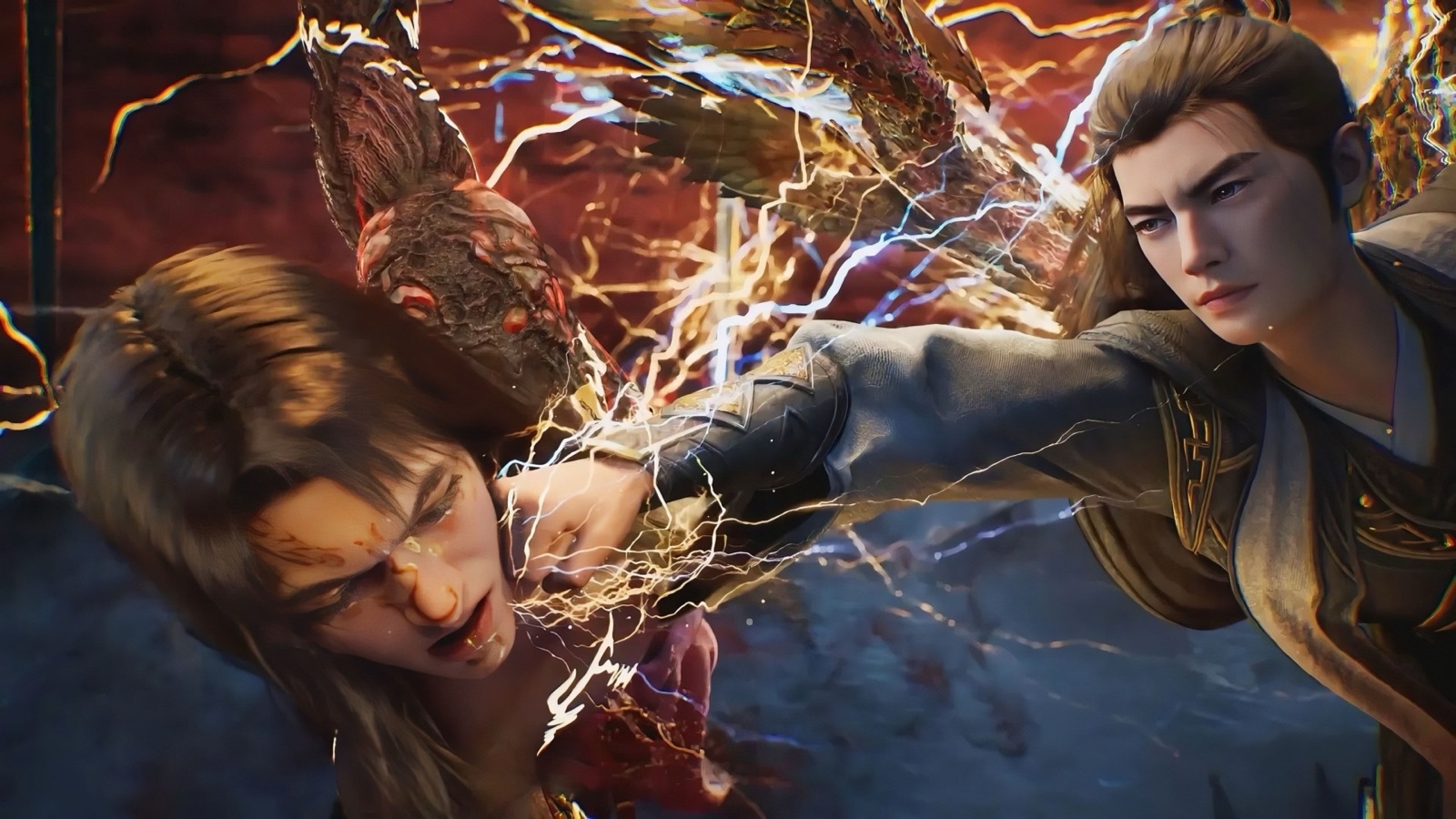
Crimson energy, demonic formations and blood-associated techniques make Wang Chan visually memorable. They also create a metadata risk because many antagonists can be surrounded by red effects.
A reliable label requires additional evidence such as costume, face, Ghost Spirit Sect context or the exact opponent. Color alone is never enough.

Wang Chan and Han Li
Their conflict reflects different kinds of cultivation advantage. Wang Chan has faction status and inherited resources; Han Li hides unusual reserves and relies on preparation.
The rivalry is compelling because public hierarchy does not reveal the full balance. Han Li often appears weaker than the collection of tools, information and exit plans he has prepared.
Why antagonists need identity pages
A visual encyclopedia that names only heroes cannot explain combat. A red-clad figure, sect emblem or technique may identify the story moment more precisely than Han Li's face.
Wang Chan can anchor links to Ghost Spirit Sect, Devil Dao war articles and battle wallpapers once the relevant screenshots are reviewed.
Translation and naming
Wang Chan is the stable English romanization for 王蝉 in most global discussion. The family name Wang should remain first unless a specific licensed subtitle deliberately reverses the order.
Aliases should record titles used in dialogue, but those titles should not become duplicate people.
Devil Dao does not mean one identical technique
Devil Dao is a broad factional and cultivation label used across translations. It does not mean every member practices the same blood art, shares one moral philosophy or belongs to the Ghost Spirit Sect.
Wang Chan's page should connect the broad Devil Dao context to his specific sect and visible methods. This hierarchy keeps search terms useful without erasing differences between antagonists.
How to identify a Wang Chan battle
The strongest evidence combines his face or costume with Ghost Spirit Sect allies, a known Han Li encounter and recognizable blood-colored technique. Episode or arc context can confirm a match when effects obscure the character.
A wallpaper title should name the opponent and conflict only after those signals agree. Until then, labels such as Devil Dao battle or crimson cultivation technique are more accurate.
Editorial visual standard
Future Wang Chan portraits must combine facial identity with faction or scene evidence. Generic red cultivation art remains unassigned until the character can be distinguished from other Devil Dao figures.
This conservative approach may produce fewer indexed images, but each result will be more useful to viewers trying to identify an actual battle.
Sources used for this guide
Bilibili's official international series page is used as the primary adaptation reference. English names can vary between the animation, novel translations and regional catalogs, so XianLore records strong aliases without presenting one fan translation as the only valid form.
A Record of a Mortal's Journey to ImmortalityBilibiliMortal's Journey FAQ
Who is Wang Chan?
Wang Chan is an important Ghost Spirit Sect antagonist whose status, blood-colored techniques and conflict with Han Li make him one of the most recognizable early cultivation villains.
Is Wang Chan a demonic cultivator?
He is associated with the Devil Dao and Ghost Spirit Sect. The term describes faction and cultivation context rather than proving that every action or image uses one identical technique.
Why is Wang Chan important to the archive?
He gives battle scenes a named opposing identity. Without antagonist records, images of Han Li's conflicts remain generic and lose their sect and story context.
What visual detail from Mortal's Journey should this guide explain next?