
Chentang Pass (陈塘关) is Ne Zha's home, Li Jing's command and the community that first fears the Demon Orb child. The first major crisis grows from prejudice, sea-monster danger, Ao Bing's Dragon Clan duty and the conflict between Demon Orb and Spirit Pearl. Ne Zha ultimately chooses to protect the city. In Ne Zha II, Wuliang's forces attack Chentang Pass and frame the dragons, using Ne Zha's family grief to direct him into the cauldron operation. Li Jing, Lady Yin, Taiyi and Ao Bing survive long enough to expose the lie, making the city the central evidence connecting family, dragons and heavenly corruption.
Chentang Pass crisis stages
The timeline separates public belief, actual actors and the relationship changed by each stage.
| Stage | What the city believes | What is actually happening | Relationship changed |
|---|---|---|---|
| Ne Zha's childhood | The Demon Orb child will inevitably harm the city | Fear and exclusion help create the isolation they claim to prevent | Ne Zha versus the community |
| Sea-monster defense | Ne Zha is only a source of disorder | He can choose to defend residents despite rejection | Ne Zha becomes protector |
| Ao Bing conflict | The Dragon Prince is an external enemy | Ao Bing is also a child carrying clan survival pressure | Friendship versus inherited duty |
| Heavenly crisis | Ne Zha's assigned fate is confirmed | Family trust and friendship allow resistance to the imposed judgment | Ne Zha with parents and Ao Bing |
| Sequel attack | The dragons destroyed Chentang Pass | Wuliang's operation attacks and frames the clan | Ne Zha is manipulated against the dragons |
| Witness reveal | Official heavenly information should be trusted | Surviving family and Shen Gongbao's stand expose the false account | Family and dragon evidence align |
| Cauldron aftermath | Dragons and demons are legitimate resources or threats | The classification supports extermination and immortality production | Former opponents cooperate against Wuliang |
The city, defenders, threatened groups and false accusers
Each relationship describes what the story establishes, without treating proximity as identity or romance.
Chentang Pass陈塘关
Family home and defended cityThe same community that fears Ne Zha becomes the home he repeatedly chooses to protect.
PersonNe Zha哪吒
Demon Orb bearer and central heroHis choices turn feared power into protection and make assigned destiny the story's central argument.
ObjectDemon Orb魔丸
Ne Zha's assigned spiritual originIt supplies volatile power and social fear, but never determines whether Ne Zha acts as protector or destroyer.
PersonLi Jing李靖
Ne Zha's father and Chentang Pass commanderFamily trust, public duty and sacrifice make him a structural part of every Chentang Pass crisis.
PersonLady Yin殷夫人
Ne Zha's mother and active defenderShe gives the family its most direct affection and pays the sequel's most devastating personal cost.
PersonTaiyi Zhenren太乙真人
Ne Zha's teacherHe trains Ne Zha, helps preserve the two souls and carries responsibility for restoring their bodies.
PersonAo Bing敖丙
Dragon Prince and Spirit Pearl bearerFriendship with Ne Zha repeatedly conflicts with the survival duty imposed by his father and clan.
PersonAo Guang敖光
Dragon King and Ao Bing's fatherHe leads the Dragon Clan, carries its grievance and must decide whether his son's future belongs to the clan or to Ao Bing himself.
PersonShen Gongbao申公豹
Ao Bing's teacher and political strategistHis actions connect the stolen Spirit Pearl, Dragon Clan strategy and the later exposure of Wuliang's scheme.
OrganizationDragon Clan龙族
Confined political communityIts genuine grievance is exploited by adults who turn Ao Bing and Chentang Pass into instruments of a larger plan.
Story timeline
The city judges Ne Zha through the Demon Orb
Residents treat assigned origin as proof of future harm, leaving Ne Zha isolated inside the place that should be home.
Ne Zha acts during sea-monster danger
Approved visual evidence records the child moving toward danger and choosing protection despite the city's suspicion.
Ne Zha and Ao Bing recognize one another
Their bond creates a personal bridge between the feared Demon Orb child and the burdened Dragon Prince before clan duty divides them.
Ao Bing's duty threatens Chentang Pass
The Spirit Pearl heir is pushed toward a plan serving the Dragon Clan, placing his friendship with Ne Zha against collective obligation.
Li Jing and Lady Yin stand with Ne Zha
The parents give Ne Zha evidence that the child is loved as a person and can choose what the city will remember about him.
Wuliang's operation attacks the city
The heavenly side creates the destruction it later attributes to the dragons, while Shen Gongbao participates in the city's defense.
Ne Zha is told the Dragon Clan killed his family
The report uses the city's earlier dragon conflict to make the lie credible and directs Ne Zha toward Wuliang's cauldron campaign.
Surviving witnesses expose the operation
Li Jing, Lady Yin, Ao Bing and Taiyi bring evidence that separates the actual attack from the official accusation.
Why Chentang Pass is more than a background city
Chentang Pass is the place where every abstract conflict becomes personal. Demon Orb fear becomes neighbors avoiding a child. Li Jing's public office becomes a father's impossible balance between safety and trust. Lady Yin's military responsibility competes with the time Ne Zha wants from his mother. Dragon Clan strategy becomes a threat to real homes.
A place page can therefore connect more entities than a generic plot summary. The city belongs to Ne Zha's identity, family relationships, sea-monster scenes, Ao Bing conflict, Wuliang's false report and Lady Yin's final story. Those edges make it one of the strongest anchors in the complete IP archive.
Stage one: a child is treated as a future disaster
The people of Chentang Pass know that Ne Zha carries the Demon Orb, and they see uncontrolled power as an existential risk. Their error is not noticing danger; it is deciding that the dangerous origin contains the complete moral future of the child.
Exclusion then produces the behavior residents expect. Ne Zha's pranks and aggression grow inside loneliness, while each response is treated as proof that fear was correct. Lady Yin, Li Jing and Taiyi have to interrupt this cycle by giving him relationships in which choice receives more attention than reputation.

Stage two: Ne Zha chooses to defend the city
Sea-monster danger creates an early test of whether Ne Zha will behave as the label predicts. He moves toward the threat and uses power on behalf of residents who have not offered him easy acceptance. Protection becomes a choice made before public approval, not a reward given after the city changes its mind.
This stage is important for image metadata. The current core contains a reviewed phone image of Ne Zha running through sea-monster danger. It can be described as a city-defense story moment because subject and context are verified. It should not be inflated into a precise claim about dialogue, episode numbering or an unrelated sequel attack.

Stage three: Ao Bing connects friendship to Dragon Clan danger
Ao Bing is the first peer who can understand Ne Zha without beginning from the city's label. Their friendship matters because it crosses the boundary between human city and dragon politics. The Spirit Pearl bearer and Demon Orb bearer discover personal similarity before adults turn their origins into opposing obligations.
When Ao Bing is pushed toward action against Chentang Pass, the city becomes the physical object separating friendship and clan duty. Ne Zha does not fight a stranger; he fights someone whose lack of freedom he understands. Ao Bing does not threaten an anonymous settlement; he threatens the home of the one person who recognized him.

Stage four: family trust changes the city's meaning
Li Jing and Lady Yin give Ne Zha reasons to define home through relationship rather than public popularity. Li Jing's willingness to accept personal cost proves trust through action. Lady Yin's affection and direct presence show that the child is not only a security problem inside the commander's household.
Their support does not mean the city has already become welcoming. It means Ne Zha can protect a place without allowing every resident's fear to define him. Chentang Pass becomes worth saving because it contains family, innocent people and the possibility of change, not because the crowd has perfectly understood the hero.

Stage five: the sequel turns Chentang Pass into false evidence
Ne Zha II returns to the city through information before returning through direct observation. Ne Zha is told that Chentang Pass and his family have been destroyed by the dragons. The prior conflict makes this believable: audiences and characters already know that Ao Guang can mobilize the Dragon Clan and that the city has been threatened before.
Wuliang's operation exploits exactly that history. A false story works best when it resembles a previous truth. The attack is real, the damage is real and dragon-human hostility is real, but the named perpetrator is false. Ne Zha's understandable grief becomes the force driving him toward the wrong target.
Stage six: Shen Gongbao and surviving family break the narrative
Shen Gongbao's role in defending the city complicates the assumption that he remains only the planner who stole the Spirit Pearl. His family has suffered under the same heavenly hierarchy, and his knowledge of the attack becomes dangerous to Wuliang's official version.
Li Jing, Lady Yin, Taiyi and Ao Bing carry the evidence into the cauldron confrontation. Their survival matters not only because Ne Zha is relieved. They are witnesses who can separate Dragon Clan action from the force that attacked under institutional authority. Family reunion becomes fact-checking with political consequences.
Stage seven: the city connects to the cauldron
Once the false blame is exposed, Chentang Pass changes the meaning of the cauldron prisoners. Dragons and demons are no longer a captured army proven guilty by the city's destruction. They are groups being refined under a case manufactured by the institution that benefits from their removal.
This does not remove the first film's conflict. Ao Guang and the Dragon Clan still made choices that endangered the city. The timeline preserves both facts: past hostility and present framing. That is more accurate than rewriting the dragons as always innocent or accepting Wuliang's claim that prior danger justifies extermination.
How images and story moments connect without overclaiming
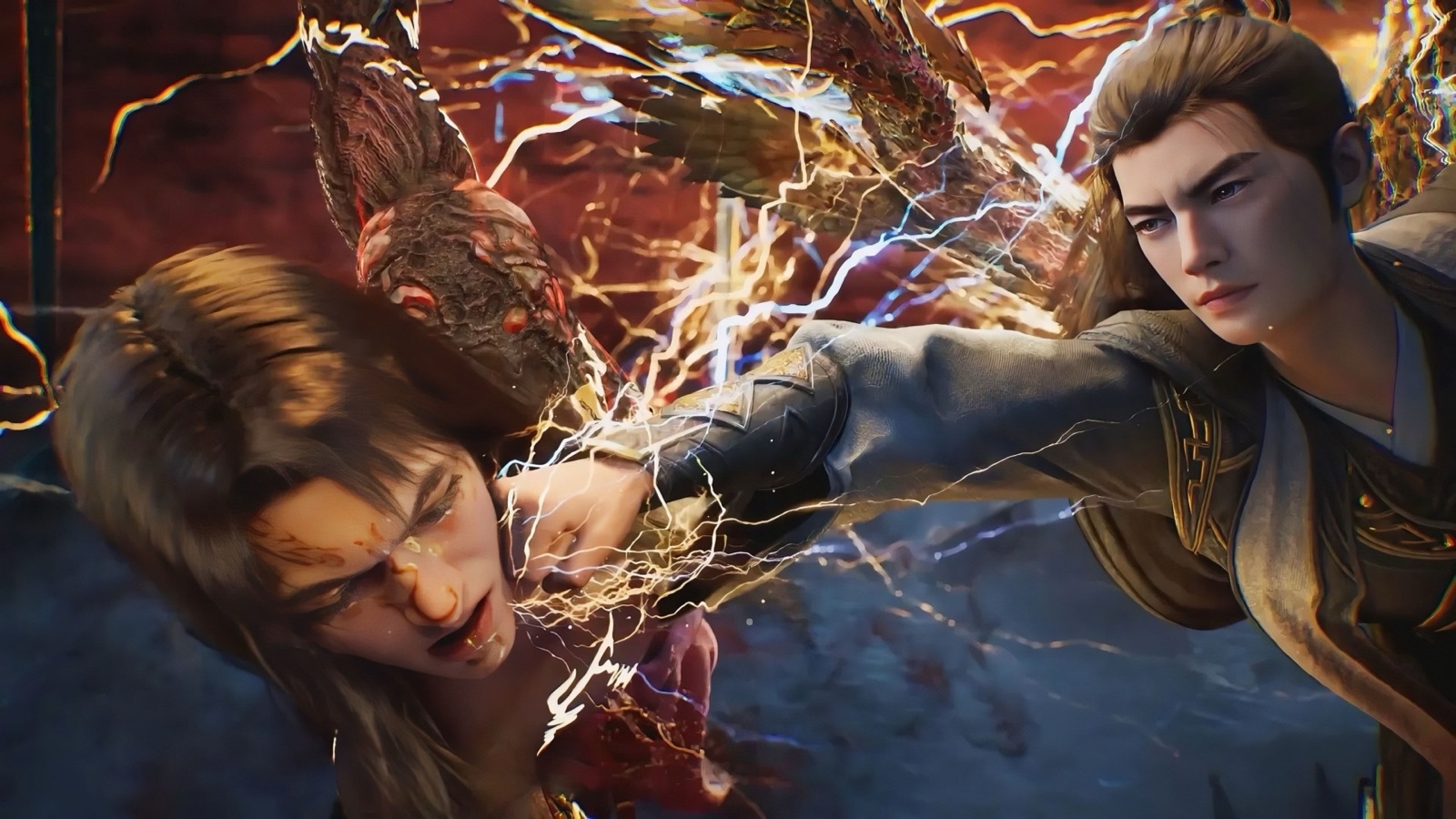
The Chentang Pass archive uses four kinds of approved visual evidence: Ne Zha child identity, direct sea-monster defense, Ne Zha and Ao Bing elemental conflict, and family or ensemble relationships. These images explain the people and forces attached to the city even when no verified frame shows the exact sequel attack.
Captions disclose that boundary. A battle ensemble can represent the connected conflict without being called the ending. A family poster can confirm sequel-era family identity without being called the survival reveal. This practice allows a visual encyclopedia to remain useful before every plot beat has a licensed official still.
The same rule strengthens future timeline pages. When an official still becomes available, it can be attached to one event without replacing the broader identity images already connected to the people involved. Search engines then receive a stable place entity, a sequence of named events and several honest visual relationships instead of a gallery whose captions all claim to depict the same battle. Users can understand the story and still know which evidence is direct.
Sources used for this guide
The licensed North American distributor page anchors the first film and the relationships, assigned destinies and Chentang Pass conflict continued by Ne Zha II.
Ne ZhaWell Go USA Entertainment · Official North American first-film pageA24 confirms the licensed international title, 2025 film, director Jiao Zi, principal English cast and the sequel's official global premise.
Ne Zha IIA24 · Official international film pageNe Zha FAQ
What is Chentang Pass in Ne Zha?
Chentang Pass is Ne Zha's home, the city commanded by Li Jing and defended by Lady Yin, and the main human community connected to the Dragon Clan conflict.
Why do the people of Chentang Pass fear Ne Zha?
They know he carries the Demon Orb and interpret dangerous potential as proof that he will inevitably become a destroyer.
Does Ne Zha protect Chentang Pass?
Yes. A central part of his story is choosing to protect the same community that rejected and feared him.
Why does Ao Bing threaten Chentang Pass?
Ao Bing is pushed by Dragon Clan survival pressure and the adult plan around the Spirit Pearl, placing duty to the clan against his friendship with Ne Zha.
Who destroys Chentang Pass in Ne Zha 2?
Wuliang's operation attacks the city and frames the Dragon Clan. Surviving witnesses later reveal that the official account was false.
Do Li Jing and Lady Yin survive the Chentang Pass attack?
Both survive the attack and reach the cauldron conflict. Lady Yin then dies during the cauldron refinement, while Li Jing survives the ending.

What visual detail from Ne Zha should this guide explain next?