Chinese divine figures come from overlapping folk, literary, Daoist, Buddhist and regional traditions. The safest way to understand them is by name, role, relationships and source context rather than one universal hierarchy.
Chinese gods and goddesses quick reference
Canonical names and relationships used throughout this archive.
| Entity or concept | Role | Why it matters |
|---|---|---|
| Ne Zha / 哪吒 | Protective deity and hero | Known through family, rebellion and rebirth stories |
| Dragon Kings / 龙王 | Water rulers | Connect seas, rain and local worship |
| Erlang Shen / 二郎神 | Divine warrior | Recognized by martial power and the third eye |
| Guanyin / 观音 | Bodhisattva of compassion | Appears across religious and literary traditions |
What the tradition actually contains
Chinese gods and goddesses (中国神祇) is best understood as a connected system rather than a list of isolated names. Chinese divine figures come from overlapping folk, literary, Daoist, Buddhist and regional traditions. The safest way to understand them is by name, role, relationships and source context rather than one universal hierarchy.
The practical value of this page is orientation. It gives global viewers one canonical English route, preserves important Chinese names where they remove ambiguity, and links every major concept to a world, character, object or follow-up guide instead of leaving the reader at a dead end.
A mythological identity can survive for centuries while its appearance changes across temples, local stories, opera, novels, animation and games. The stable layer is therefore the name, role, recurring relationships and symbolic function. Costume color or one weapon may help recognition, but neither should be treated as universal when the source traditions themselves are diverse.
Translation should make the subject easier to enter without erasing the original vocabulary. This page uses the English term most global readers search, records Chinese names and useful aliases, and avoids creating duplicate entities for spelling variants.
For a first-time reader, the most important result is a dependable vocabulary. Once the names and category boundaries are stable, later questions about powers, chronology, symbolism or wallpaper identity become much easier to answer without repeating the same introduction.
How identities and symbols connect
How identities and symbols connect requires the same editorial discipline used across XianLore: stable names, explicit relationships and a clear boundary between source tradition, adaptation and visual interpretation. For this guide, the core entities are Ne Zha / 哪吒, Dragon Kings / 龙王, Erlang Shen / 二郎神, Guanyin / 观音.
The practical value of this page is orientation. It gives global viewers one canonical English route, preserves important Chinese names where they remove ambiguity, and links every major concept to a world, character, object or follow-up guide instead of leaving the reader at a dead end.
Relationships are often more reliable than isolated power lists. A Dragon King is understood through water, territory, kinship and negotiation; a pilgrimage figure is understood through teachers, companions, vows and trials. Mapping those links prevents a modern adaptation's dramatic redesign from replacing the wider cultural identity.
Every table row is designed to become an internal-link relationship as the archive grows. That structure allows a search user to move laterally from a broad question to the exact person, object, faction, place or event that answers it.
For a returning fan, the relationship map is the deeper layer. It shows where this subject intersects with another character, institution or object and makes it possible to follow one thread across several pages without relying on a search engine for every step.
How modern adaptations change the visual language
How modern adaptations change the visual language requires the same editorial discipline used across XianLore: stable names, explicit relationships and a clear boundary between source tradition, adaptation and visual interpretation. For this guide, the core entities are Ne Zha / 哪吒, Dragon Kings / 龙王, Erlang Shen / 二郎神, Guanyin / 观音.
The practical value of this page is orientation. It gives global viewers one canonical English route, preserves important Chinese names where they remove ambiguity, and links every major concept to a world, character, object or follow-up guide instead of leaving the reader at a dead end.
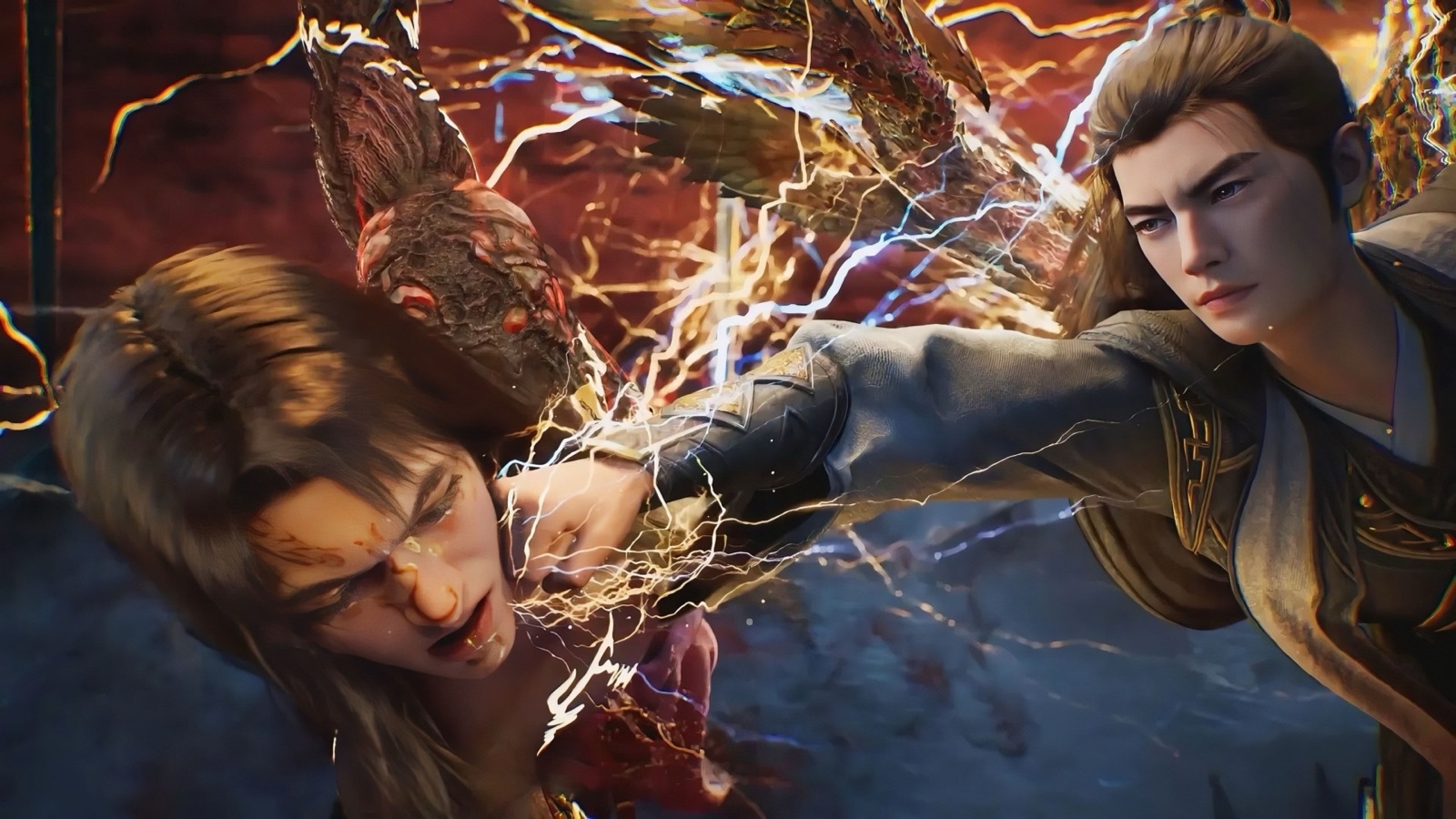
Modern visual media compresses complex traditions into immediately readable silhouettes. That is useful for storytelling, but an encyclopedia must label what belongs to the broader tradition and what belongs only to one film, game or series. XianLore keeps those layers connected without pretending they are identical.
The visual archive follows a stricter rule than a mood board. A beautiful image can remain available for browsing, but it enters an indexed guide only when identity and context are strong enough to support the surrounding text.
For image discovery, use the visible identity signals and linked world context together. Color palette by itself is weak evidence; named artifacts, costume structure, companions, location and adaptation-specific design provide a much stronger basis for classification.
How to use this encyclopedia
How to use this encyclopedia requires the same editorial discipline used across XianLore: stable names, explicit relationships and a clear boundary between source tradition, adaptation and visual interpretation. For this guide, the core entities are Ne Zha / 哪吒, Dragon Kings / 龙王, Erlang Shen / 二郎神, Guanyin / 观音.
The practical value of this page is orientation. It gives global viewers one canonical English route, preserves important Chinese names where they remove ambiguity, and links every major concept to a world, character, object or follow-up guide instead of leaving the reader at a dead end.
Use the entity links on this page as a reading order. Begin with the broad identity, open the named people or objects, then continue to a world archive where the same entities appear in a specific narrative. The wallpaper collection should be the final visual layer, not the only source of understanding.
Corrections should improve the entity graph, not only one paragraph. A better alias, source or relationship can update the character page, world page, related article, image metadata and future translated editions together.
For research and contribution, prefer corrections that can be checked and reused: an official English title, an original Chinese name, a licensed release page, a clearly described relationship or a scene identification supported by multiple visible details.
Sources used for this guide
High-authority background reference for the classical novel and its place in Chinese literature.
Journey to the WestEncyclopaedia Britannica · reference overviewNe Zha FAQ
What is the best starting point for Chinese gods and goddesses?
Chinese divine figures come from overlapping folk, literary, Daoist, Buddhist and regional traditions. The safest way to understand them is by name, role, relationships and source context rather than one universal hierarchy.
Why does Chinese gods and goddesses have different English names online?
Subtitles, fan translations, romanization and adaptation marketing can choose different terms. XianLore keeps one canonical route while recording useful aliases and Chinese names.
Does this guide combine every adaptation of Chinese gods and goddesses?
No. It explains shared identity first, then labels adaptation-specific powers, designs and events when those differences matter.
How are images selected for this guide?
Only images with a confirmed character, object or scene relationship are used as contextual illustrations. Uncertain images remain outside indexed editorial pages.

What visual detail from Ne Zha should this guide explain next?