Why Black Myth character identity is unusually difficult
Black Myth: Wukong does not present its cast as a simple list of heroes and villains. It builds on Journey to the West, Chinese folk religion, celestial bureaucracy and centuries of visual tradition. A familiar title can refer to a mythological office, a transformed body, an inherited legacy or a character whose motives only become clear much later.
That makes image identification more demanding than matching armor colors. A reliable archive needs the English search name, Chinese name, visible form, story context and the relationship between the game character and the older legend. XianLore begins with five identities that global audiences repeatedly search for and that can support deeper visual records.
The Destined One is not simply Sun Wukong
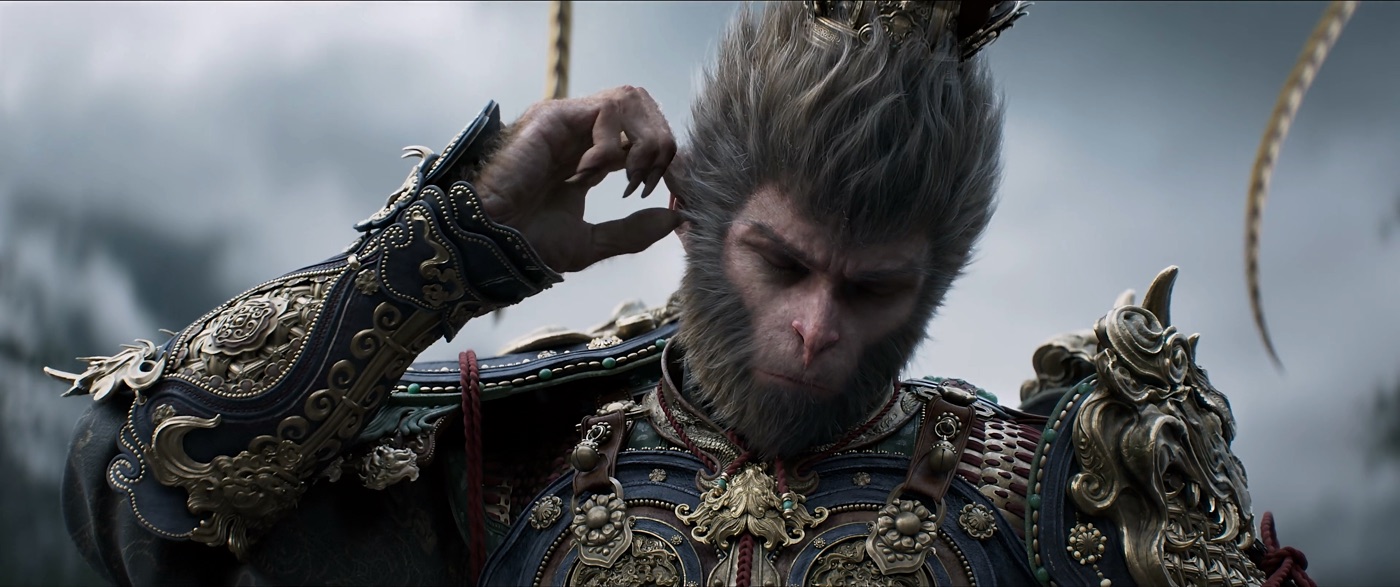
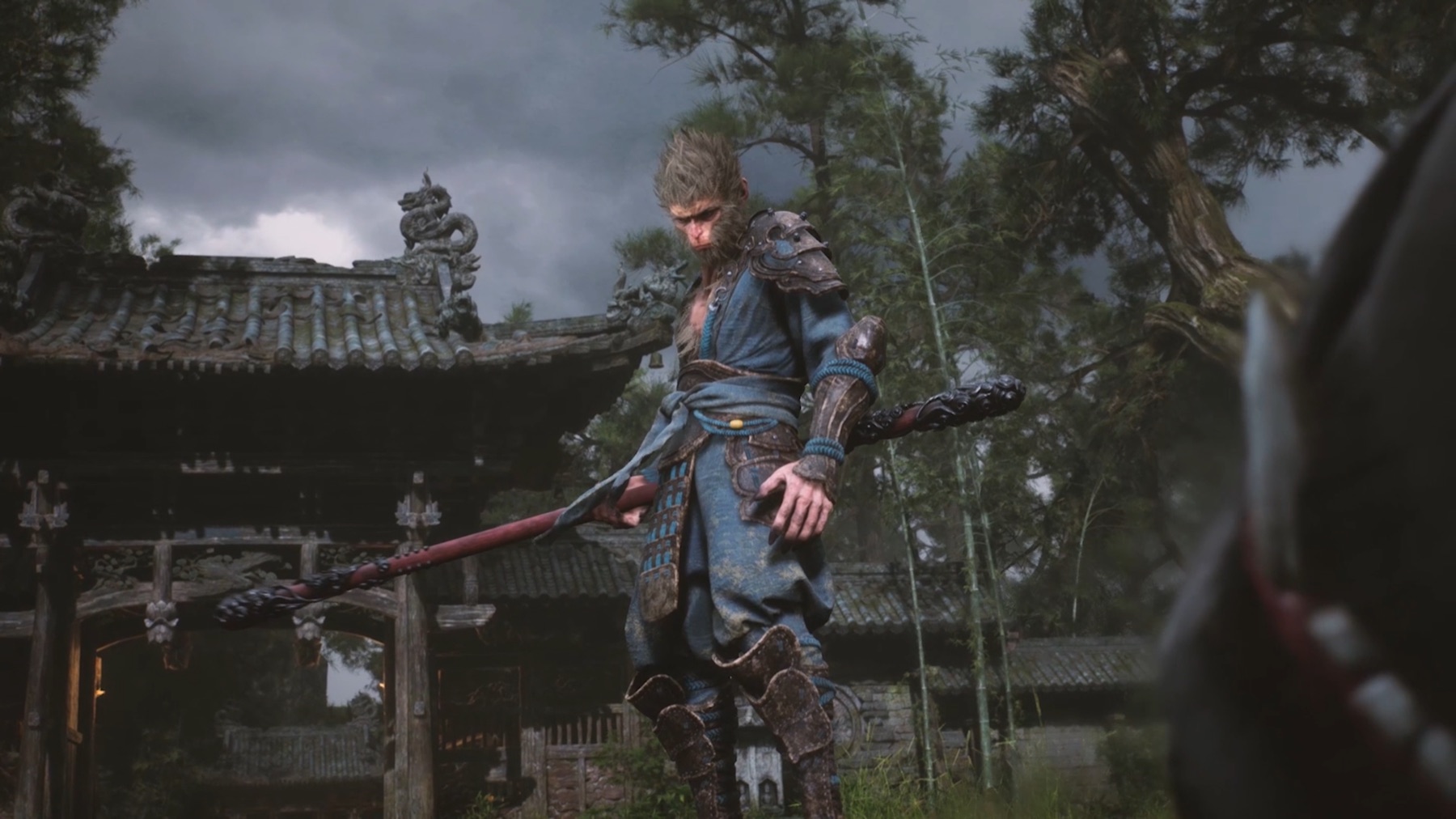
The Destined One, 天命人, is the player-controlled monkey protagonist. He follows a path shaped by Sun Wukong and searches for the relics connected to the Great Sage, but those links do not make the two names interchangeable. Treating every image of the protagonist as Sun Wukong creates incorrect character pages, misleading alt text and a visual archive that cannot explain its own story.
The most dependable recognition signals are his heavy low brow, deep-set eyes, short primate muzzle, exposed ears, grey-brown cheek and jaw fur, tall coarse hair silhouette and lean combat build. His staff and gourd reinforce the identity when they belong to the scene, while armor can change substantially across equipment sets.
XianLore therefore stores The Destined One as his own canonical entity. Sun Wukong and Great Sage imagery can later receive separate records when the visible form and story moment justify them.
Zhu Bajie: the surviving pilgrim who remembers the old journey
Zhu Bajie, 猪八戒, is much more than comic relief. He is one of the original pilgrims from Journey to the West and carries personal knowledge of Wukong, the celestial world and the cost of events that occurred before the player begins the game.
Global viewers may also know him as Pigsy, Bajie or Zhu Wuneng. His pig features, compact body and nine-toothed rake provide strong visual cues, but the game gives him a more weathered and emotionally complicated presence than many lighter adaptations. His archive should connect portraits and battle scenes to the chapter and relationship that give them meaning.
Erlang Shen: rival, celestial warrior and keeper of hidden meaning
Erlang Shen, 二郎神, is one of Chinese mythology's most recognizable martial deities. He is commonly associated with a third eye, a long spear, celestial authority and the name Yang Jian. In Black Myth, his confrontation with Wukong is not merely an opening spectacle; it establishes questions that the entire journey gradually reinterprets.
A correct visual record should preserve his third-eye feature, refined armor and weapon context. Generic spear-wielding celestial warriors should not inherit his name automatically. Searches for Erlang boss, Yang Jian and the secret ending should converge on one identity rather than fragment into duplicate character records.
Fourth Sister: why a supporting character became a fan favorite
Fourth Sister, 四妹, belongs to the spider family encountered in Webbed Hollow. She attracts attention because her behavior toward the Destined One feels unusually restrained and protective, while her story remains deliberately unresolved. This combination has produced strong interest in her fate, dialogue and possible relationship to the protagonist.
Her identity depends on more than a young woman wearing dark clothes. The Webbed Hollow setting, spider-family relationships, hairstyle, costume layers and exact scene should be checked together. Until enough images form a coherent reference set, XianLore keeps her in the world cast index instead of publishing a thin standalone page.
Kang-Jin Star: a celestial name behind two memorable forms
Kang-Jin Star, 亢金星君, is connected to the Kang mansion of the Twenty-Eight Mansions in Chinese astronomy. Global players also search for Kang-Jin Loong because of the dragon-form encounter. The names describe connected appearances and should be explained together rather than treated as unrelated bosses.
Her pale celestial design, cold blue-white visual palette and dragon-associated imagery make her highly suitable for wallpapers, but form metadata matters. An archive entry should state whether an image shows the celestial figure, the dragon form or a transformation scene.
How XianLore will build the Black Myth archive
The first formal identity package belongs to The Destined One because the local material library contains the largest coherent image set for him. Its V1 reference board covers base model, frontal armor, close face, three-quarter face, staff pose, portrait, armor variation, lighting variation and a phone-format close-up.
Zhu Bajie is the next strongest candidate because several clear images are already present. Erlang Shen, Fourth Sister and Kang-Jin Star stay visible in the world-level cast record while their candidate images are reviewed. This preserves search value without pretending that uncertain portraits have been verified.
Each future standalone page should earn its index status through a stable portrait, Chinese and English names, visual cues, role, relationships and enough distinct material to be useful. That is how the archive becomes more knowledgeable than a flat image search.
What visual detail from Black Myth should this guide explain next?