
Five hundred years before the Traveler arrives
During the cataclysm, Greater Lord Rukkhadevata confronts corruption tied to forbidden knowledge. Knowing that her contaminated consciousness cannot erase itself, she creates a new life from Irminsul's purest branch. That new being is Nahida.
The sages find the small new Archon and bring her to Sumeru. Instead of treating her as a deity who needs experience and support, they compare her with Rukkhadevata and conclude that she is inadequate.
Nahida is confined in the Sanctuary of Surasthana. Her long isolation explains both her extraordinary observational habits and the uncertainty she shows when asked to lead people directly.

Centuries of watching from confinement
Nahida is not completely cut off from Sumeru. Through the Akasha and her consciousness abilities, she observes people, learns their problems and sometimes reaches them in dreams. Yet observation is not the same as participating in society.
The Akademiya's control becomes self-reinforcing. The sages deny her opportunities because she lacks experience, while confinement prevents her from gaining that experience. Public devotion to Rukkhadevata further weakens Nahida's confidence.
Her compassion survives this treatment. She takes interest in individual lives and develops a patient, analogy-rich way of explaining difficult ideas.
Meeting the Traveler and the Sabzeruz samsara
The Traveler encounters Nahida through the repeating Sabzeruz Festival. The Akademiya has constructed a dream cycle to harvest cognitive energy, and most participants cannot recognize that the day is repeating.
Nahida guides the Traveler through observation, deduction and repeated attempts. The cycle ends when its dream structure and host are understood, but Dunyarzad's suffering shows the human cost of the sages' project.
This event gives Nahida an active ally outside the systems controlling her. It also lets the Traveler see that the imprisoned Archon already possesses empathy and practical wisdom, even if she doubts her own worth.

The sages' false god project
Grand Sage Azar and his allies cooperate with Il Dottore to create a new god using Scaramouche, the Electro Gnosis and knowledge gathered through Sumeru's systems. The plan treats both citizens and Nahida as resources that can be replaced.
Alhaitham, Cyno, Dehya, Nilou, the Traveler and others build a coordinated rescue. Each person handles a different institutional or physical obstacle, reflecting Nahida's larger theme that knowledge becomes powerful through relationships.
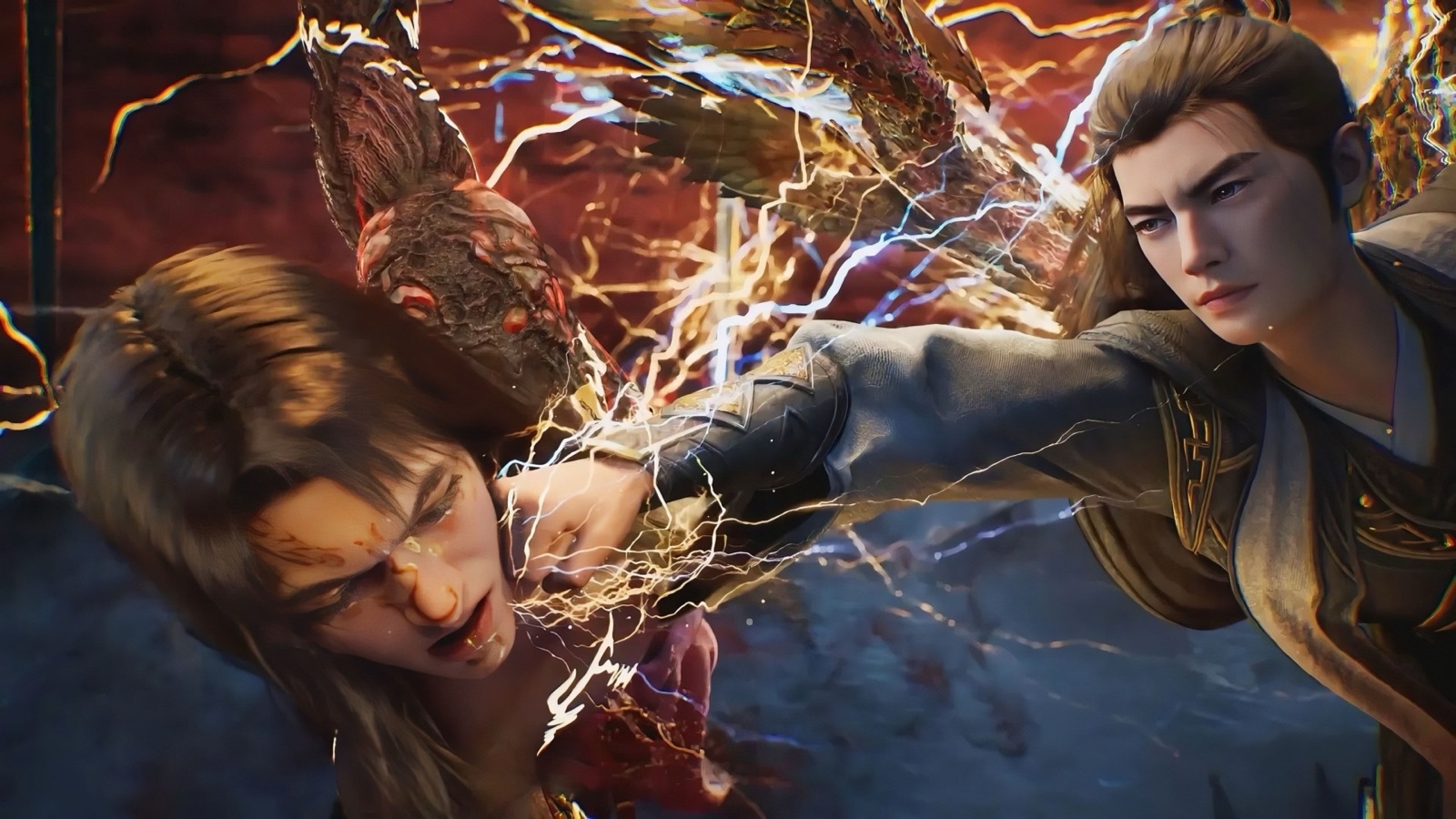
Nahida is freed, and the confrontation with the transformed Scaramouche follows. She uses repeated simulated battles to gather enough information for the Traveler to win rather than trying to overpower him alone.
Dottore's bargain and the journey into Irminsul
After the rescue, Dottore remains an opponent Nahida cannot defeat through direct force. She negotiates from a position of limited leverage, threatening to destroy a Gnosis to test whether it could awaken the Heavenly Principles.
The bargain costs both the Electro and Dendro Gnoses, but Nahida obtains valuable information and forces Dottore to erase his other segments. The scene demonstrates strategic courage: she understands the danger, creates uncertainty for a stronger enemy and protects what she can.
Nahida then enters Irminsul with the Traveler and reaches the remaining consciousness of Rukkhadevata. She learns her origin and the reason she alone can remove the corruption.
How Nahida's confidence changes across the arc
Early Nahida repeatedly measures herself against the image of Rukkhadevata preserved by Sumeru's institutions. She knows much but interprets her lack of public achievement as evidence that she is not qualified to lead.
The Sabzeruz crisis gives her practical partnership. The rescue operation proves that respected figures will risk their positions for a different Sumeru. The confrontation with Scaramouche shows that her planning can defeat a project built by the nation's most powerful scholars.
Confidence does not arrive as a sudden personality replacement. Nahida remains gentle, curious and willing to question herself. What changes is her willingness to make a decision and accept that uncertainty is part of leadership rather than proof that she should remain confined.
Where Nahida's character stories fit
The Archon Quest establishes Nahida's liberation and the Irminsul revelation. Her later story material expands the consequences: dreams can preserve pain, elemental life forms have their own communities and the Dendro Archon must decide how much risk to accept when helping them.
These chapters should be read after the main Sumeru storyline because they assume her public role and deeper relationship with the Traveler. They also show that becoming Archon in practice is continuing work, not a completed coronation.
For a visual timeline, scenes should be labeled by period: confinement, Sabzeruz samsara, rescue and god battle, Irminsul, or post-liberation Sumeru. That keeps a beautiful image connected to the growth it represents.
Erasure, grief and a new beginning
Nahida deletes Rukkhadevata from Irminsul. Everyone inside Teyvat forgets the previous Archon as a separate person, while the Traveler remembers the truth. Nahida feels an unexplained grief without retaining its source.
She returns to public life as Sumeru's recognized Dendro Archon and begins rebuilding trust between the nation, its institutions and herself. Her later care for Wanderer shows that she does not confuse accountability with permanent exclusion.
The timeline is ultimately a movement from observation to participation. Nahida does not become wise because a title suddenly activates. She becomes a leader by making decisions with other people, accepting painful truth and choosing a future that is her own.

What visual detail from Genshin Impact should this guide explain next?