Ne Zha is a Chinese mythological hero repeatedly reinterpreted in novels, opera, animation and games. In the recent animated-film continuity, he is the reincarnation of the Demon Orb: feared as a destined destroyer but determined to define himself through choice. XianLore keeps the mythological entity and the film-specific child design connected without pretending that every Ne Zha adaptation shares one biography or appearance.
Ne Zha identity and adaptation guide
The archive separates durable mythological identity from facts that belong to one film continuity.
| Question | Reliable answer | Archive rule |
|---|---|---|
| Who is Ne Zha? | A major Chinese mythological hero | Keep Nezha and 哪吒 as aliases of one broad entity |
| What is the Demon Orb? | The source of the film version's feared destiny | Label it as animated-film continuity, not universal mythology |
| Who is Ao Bing? | A dragon prince and Ne Zha's defining counterpart | Connect friendship, conflict and shared fate |
| Strong visual signals | Child form, dark eye circles, red accents, fire and lotus imagery | Require more than generic flame effects |
| Are all Ne Zha designs the same? | No | Record adaptation, age, costume and story moment |
Who is Ne Zha?
Ne Zha is one of the most recognizable youthful heroes in Chinese mythology. He appears across religious traditions, classical literature, opera, television, animation and games, usually as a fierce protector whose childlike form contrasts with extraordinary power.
International viewers often meet him through a single modern film and assume that version is the original. A reliable encyclopedia begins with the larger mythological identity, then states which details belong to the film continuity being discussed.

The Demon Orb and the problem of assigned destiny
The modern film reworks Ne Zha's birth around a divided spiritual pearl. Ne Zha receives the Demon Orb and is treated as if destruction is his unavoidable nature.
The emotional argument is larger than whether he can control fire. Other people judge him before knowing him, and he responds with anger, performance and isolation. His growth begins when he decides that origin does not have to dictate moral choice.
Ne Zha and Ao Bing
Ao Bing is not only an opponent placed beside the hero. He is another young figure carrying the expectations and survival pressure of an entire community.
Their friendship makes the conflict painful because both understand what it means to be assigned a role before acting freely. Relationship metadata should therefore include friendship, mirrored destiny, conflict and sacrifice rather than reducing Ao Bing to a boss or rival.

Li Jing, Lady Yin and parental trust
Ne Zha's parents respond differently to the fear surrounding him, but their decisions shape whether he believes he can belong among other people. Li Jing's restraint and sacrifice complicate the image of an emotionally distant father, while Lady Yin gives Ne Zha direct affection and practical companionship.
The family relationship matters because the hero's rebellion is not simply rejection of authority. It is also a demand to be seen as a person capable of choice.

Weapons, lotus and fire
Across traditional and modern versions, Ne Zha is associated with a powerful visual vocabulary: the Fire-Tip Spear, Wind Fire Wheels, Universe Ring, red sash, lotus imagery and explosive flame.
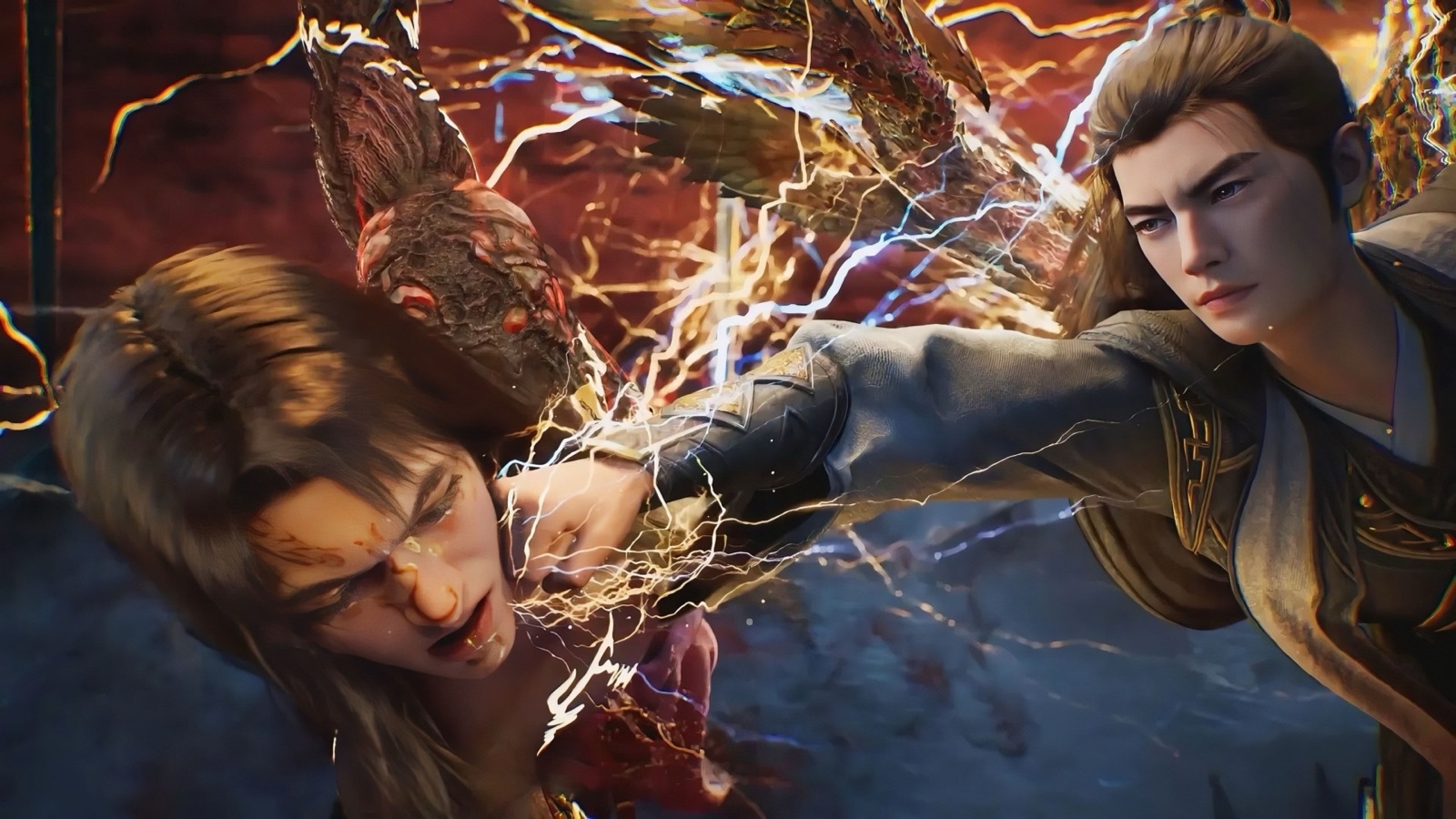
Not every adaptation uses every item in the same way. Wallpaper metadata should name only the weapon or form that is actually visible and should record whether the image belongs to mythology, a specific film or another licensed adaptation.
How to recognize the animated-film Ne Zha
The strongest modern-film signals are a small child body, dark eye circles, dark hair gathered into twin buns, red clothing, a defiant expression and red-orange fire effects. Adult heroic Ne Zha art may belong to another form or adaptation.
Fire alone is insufficient. A generic child with red ribbons, an original character on lotus petals or an unrelated Chinese fantasy warrior should remain unassigned until face, hair, costume and source context agree.

Why one canonical page still needs adaptation labels
Users search Ne Zha, Nezha, 哪吒, Demon Orb and Ne Zha 2 as if they were interchangeable. One canonical entity should absorb those routes, but each image and article still needs an adaptation field.
This structure keeps the archive discoverable without mixing the child film model, traditional deity iconography and unrelated game versions into one unexplained gallery.
Taiyi Zhenren, Shen Gongbao and competing teachers
Taiyi Zhenren and Shen Gongbao represent more than comic and villainous functions. Each influences how spiritual talent, status and fate are interpreted around Ne Zha and Ao Bing.
Their methods show that the children's conflict is maintained by adult institutions and rival plans. A relationship graph should connect teacher, assigned destiny and political interest instead of blaming every consequence on the two young heroes.
What the sequel changes
Ne Zha 2 continues from consequences that the first film cannot resolve permanently. Bodies, souls, family obligations and the Dragon Clan's position expand the scale beyond one child's acceptance by Chentang Pass.
Because sequel imagery can reveal transformed states and late-story alliances, it needs a spoiler field. A dramatic poster should not be described only as fire wallpaper when it represents a specific change in identity or relationship.
Translation and search behavior
Ne Zha and Nezha are the most common Latin-script forms, while international users may also search Demon Child, Demon Orb or the sequel title. Those terms should converge on one navigational entity.
The page can then route users to mythology, first-film and sequel sections. Canonical consolidation works best when it explains variation rather than pretending variation does not exist.
Sources used for this guide
The licensed distributor page anchors the first animated film and its international release identity. XianLore uses it separately from the A24 sequel page so the two films are not silently merged.
Ne ZhaWell Go USA Entertainment · Official North American first-film pageA24's official film page establishes the international title and licensed release context. Mythological background and film-specific continuity are kept separate in the article.
Ne Zha 2A24 · Official international film pageNe Zha FAQ
Is Ne Zha a god or a demon?
Ne Zha is a Chinese mythological deity and heroic figure. The Demon Orb identity belongs specifically to the modern animated-film continuity and should not replace the broader mythological answer.
Are Ne Zha and Nezha the same name?
Yes. Nezha is a common joined romanization of the Chinese name 哪吒, while Ne Zha is the spaced form used by many international releases.
What is Ne Zha's relationship with Ao Bing?
In the animated-film continuity they are friends, rivals and counterparts whose assigned destinies place them on opposite sides of the same crisis.
Why does Ne Zha have dark circles around his eyes?
The dark eye circles are a defining design feature of the recent animated child version, reinforcing his unruly and sleep-deprived appearance.
How many Ne Zha images are in XianLore?
The source archive contains 216 records. After identity, duplicate, safety and adaptation review, 28 images form the indexable Ne Zha V1 core while the remaining safe records stay noindex.

What visual detail from Ne Zha should this guide explain next?